
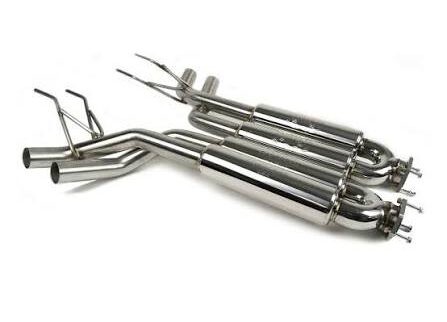
The 4.0-litre twin-turbo V8 in the Mercedes-AMG G 63 already sounds impressive from the factory. Yet many owners want more character: a deeper tone at idle, sharper crackles on the overrun and a more aggressive look at the rear. A performance exhaust system delivers all of that, provided it is chosen and installed correctly.
What a performance exhaust changes
Sound. This is the main reason for the upgrade. A well-designed system adds volume and a richer tone without unpleasant drone at motorway speed.
Weight. Aftermarket systems in stainless steel or titanium are often noticeably lighter than the original parts.
Flow and power. Less back pressure can bring a modest power gain. Larger gains usually require an ECU remap matched to the exhaust.
Look. New tailpipes, often in carbon, titanium or black ceramic coating, complete the rear end, especially when combined with a body kit.
Valved systems: loud when you want it
Modern performance exhausts for the G 63 use electronically controlled valves. They stay closed in comfort mode for quiet cold starts and relaxed motorway driving, and open in sport mode for the full V8 sound. Quality systems integrate with the factory drive modes, so no extra switches are needed. Some offer a remote control or app to change the sound at any time.
Titanium or stainless steel
- Stainless steel is durable, more affordable and gives a deep, full tone.
- Titanium is significantly lighter, has a sharper, more metallic sound and develops a distinctive blue-gold heat tint on the tips.
Both materials resist corrosion well, which matters for a car used all year round.
Cat-back or full system
A cat-back system replaces everything after the catalytic converters: silencers, pipes and tips. It is the most common choice and keeps the car compliant with emissions rules. Downpipes and replacing the catalysts may bring more power and sound, but they can affect emissions compliance and warranty.
Legal and practical points
Noise and emissions rules differ by country. Before buying, check that the system has the required certificates for road use. A valved system is a sensible compromise: quiet when needed, dramatic when allowed.
It is also worth checking how the upgrade affects the manufacturer’s warranty and choosing a workshop that can provide documentation for the installed parts.
Installation
A professional installation includes checking hanger alignment, heat shielding and clearance around the body and rear diff, plus connecting the valve wiring to the vehicle’s systems. After installation the car should run without warning messages.
Conclusion
A performance exhaust is one of the most emotional upgrades for a G 63: you hear it every time you start the engine. Choose a valved system with proper certification and have it fitted by a team that knows the G-Class inside out, such as Kubay Design.